
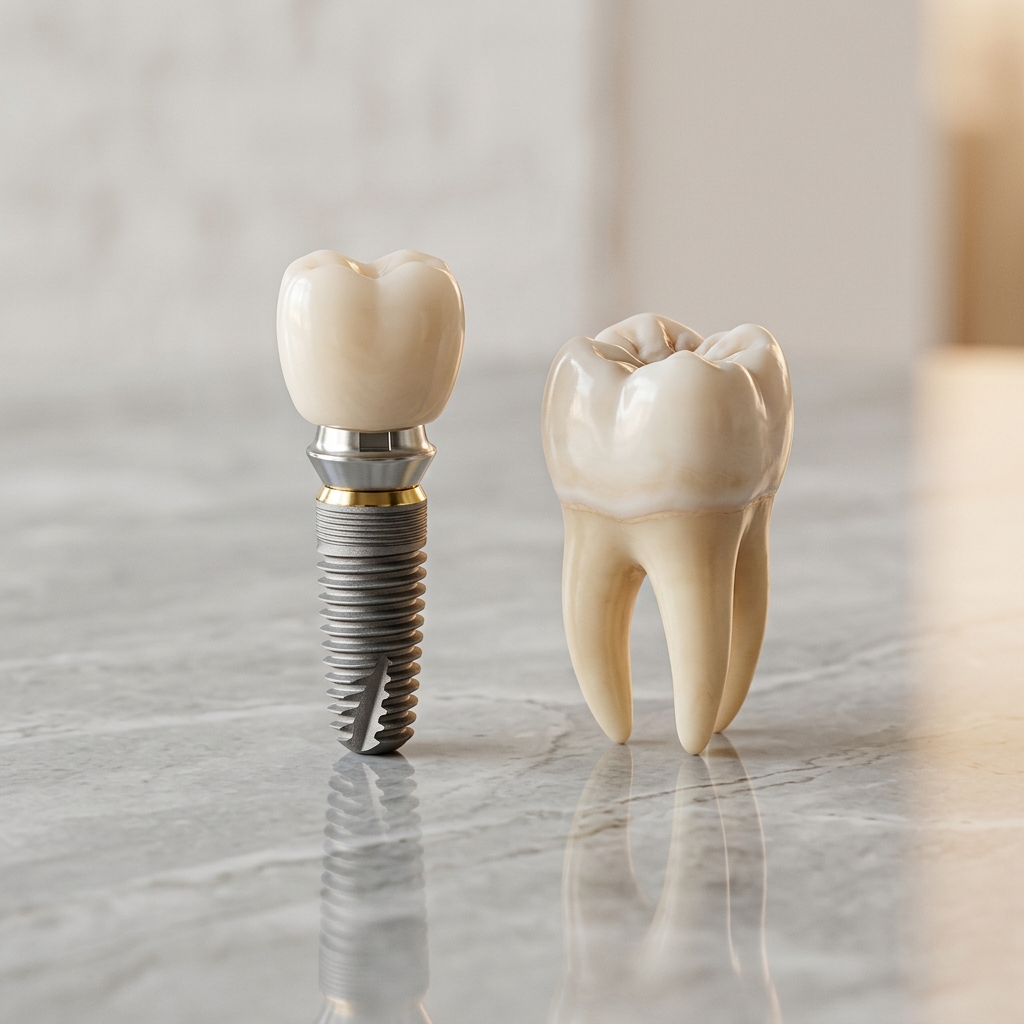
Comparing dental implants and dentures? Discover the key differences in chewing power, jawbone preservation, daily maintenance, and overall value to choose the best solution for your smile.
Losing multiple teeth or facing the loss of an entire dental arch is a life-altering event that affects your ability to chew nutritious foods, speak clearly, and smile with confidence. For decades, traditional removable dentures were the only viable solution for widespread tooth loss. Today, dental implants offer a permanent, technologically advanced alternative that closely replicates the biological structure of natural teeth.
Choosing between dental implants and traditional dentures is one of the most important healthcare decisions you can make for your long-term wellness. Both options restore the appearance of a full smile, but they function in fundamentally different ways beneath the surface.
To help you make an informed decision, here is a detailed, evidence-based comparison of dental implants versus dentures across the seven most important patient factors.
1. Chewing Power and Dietary Freedom
The difference in chewing capability between dental implants and conventional dentures is substantial. Natural teeth are anchored deep within the jawbone, providing an average bite force of approximately two hundred to two hundred and fifty pounds per square inch.
Conventional dentures rest directly on the delicate oral mucosa and the alveolar ridge without mechanical anchorage. According to clinical studies published in the Journal of Prosthetic Dentistry, conventional full dentures restore only about twenty to thirty percent of natural chewing efficiency. This reduction often forces denture wearers to avoid crunchy fruits, fibrous vegetables, tough proteins, and crusty breads, which can lead to nutritional deficiencies over time.
In contrast, dental implants are anchored directly into the bone through osseointegration. Implant-supported crowns, bridges, and full-arch prostheses restore between eighty-five and ninety-five percent of natural bite force. With dental implants, you can comfortably bite into crisp apples, chew tender steaks, enjoy corn on the cob, and eat your favorite meals with zero slipping or discomfort.
2. Jawbone Health and Facial Structure Preservation
One of the most critical yet frequently overlooked aspects of tooth loss is jawbone resorption. Natural tooth roots continuously transmit chewing forces into the surrounding alveolar bone. This mechanical stimulation signals the body to maintain bone density and volume, a biological principle known as Wolff's Law.
When teeth are lost, this stimulation disappears. Traditional dentures do not replace tooth roots; in fact, the constant pressure and friction of a denture plate resting on the gum ridge can actually accelerate bone resorption. Over five to ten years, this progressive bone loss leads to a sunken, prematurely aged facial appearance, characterized by thinned lips, deep wrinkles around the mouth, and a collapsed lower jaw.
Dental implants are the only tooth replacement option that preserves and stimulates natural jawbone. By acting as artificial titanium roots, implants stimulate continuous bone remodeling, halting bone loss and preserving your natural facial contours for decades to come.
3. Daily Comfort and Stability
Traditional dentures rely on suction, saliva, and messy dental adhesives to stay in place on the upper palate or lower ridge. The lower denture is particularly prone to floating, slipping, or dislodging during speech or laughter because the tongue and cheek muscles constantly move against it. Additionally, trapped food particles beneath the acrylic base can cause painful gum sores and inflammation.
Dental implants eliminate these concerns entirely. Because the restorations are securely anchored to the jawbone, there is zero slipping, clicking, or shifting. Upper implant restorations do not require an acrylic plate covering the roof of your mouth, allowing you to taste food fully and speak with complete clarity and confidence.
4. Maintenance and Oral Hygiene Routine
Caring for dental implants is nearly identical to caring for natural teeth. You brush twice a day with a soft-bristle toothbrush, floss daily with implant-specific floss or a water flosser, and attend routine dental cleanings every six months. There is no need for messy adhesive creams, specialized soaking tablets, or removing your teeth overnight.
Conventional dentures require an extensive daily regimen. They must be removed after meals for rinsing, cleaned with specialized non-abrasive denture pastes to avoid scratching the acrylic, and soaked overnight in cleansing solutions to prevent fungal and bacterial colonization such as denture stomatitis.
5. Durability, Lifespan, and Long-Term Value
When evaluating the financial aspect of tooth replacement, it is important to consider lifetime cost rather than just the initial price tag:
- Traditional Dentures: While traditional dentures carry a lower initial upfront cost, they require frequent adjustments, professional relining every one to two years, and complete replacement every five to seven years due to progressive jawbone shrinkage. Over a lifetime, the cumulative costs of relines, replacements, adhesives, and cleaners add up significantly.
- Dental Implants: Dental implants require a higher initial investment, but they boast a documented long-term clinical success rate exceeding ninety-five percent according to the American Academy of Implant Dentistry. With proper home care and routine checkups, the titanium implant post can easily last a lifetime, making it the most cost-effective long-term solution.
6. Hybrid Solutions: Implant-Supported Overdentures
For patients seeking a middle ground between traditional dentures and full-arch fixed bridges, implant-supported overdentures offer an outstanding solution. Commonly referred to as snap-in dentures or All-on-4 restorations, these prostheses utilize two to six dental implants per arch to anchor a custom denture securely in place.
Implant-supported overdentures provide significantly improved stability and chewing efficiency compared to traditional dentures while remaining a more budget-accessible option than full-arch porcelain bridges.
Comparison Summary: Implants vs. Dentures at a Glance
- Bite Force: Dental implants provide 85% to 95% of natural chewing power; traditional dentures provide 20% to 30%.
- Bone Preservation: Implants actively stimulate and preserve jawbone; dentures allow ongoing bone resorption.
- Fit and Stability: Implants are permanently fixed or securely snapped in; dentures are prone to slipping and shifting.
- Palate Coverage: Implants leave the upper palate open for full taste and speech; upper dentures cover the palate with acrylic.
- Lifespan: Implant posts can last a lifetime with proper care; traditional dentures need replacement every 5 to 7 years.
Frequently Asked Questions
Can I switch from traditional dentures to dental implants?
Yes. Many patients who have worn dentures for years successfully transition to dental implants. If you have experienced bone loss since getting dentures, Dr. Wang can perform targeted bone grafting to rebuild the ridge before implant placement.
Is the dental implant procedure painful?
Most patients report that implant surgery is surprisingly comfortable. With modern local anesthesia and gentle surgical techniques, the procedure is smooth and painless. Post-operative soreness is generally mild and easily managed with over-the-counter pain relievers for two to three days.
Discover Your Ideal Smile Solution in Walnut, CA
At The Honest Tooth Dentistry in Walnut, California, Dr. Mark Wang provides compassionate, transparent guidance to help you choose the ideal restorative treatment for your unique needs. Schedule your personalized consultation today to explore your options.