
Proper dental implant care prevents peri-implantitis and ensures lifelong success. Learn the best brushing techniques, safe flossing methods, and cleaning tools.
One of the greatest advantages of dental implants is that they cannot get cavities. The titanium post, custom abutment, and porcelain or zirconia crown are completely impervious to the acid-producing bacteria that cause tooth decay. However, this does not mean you can ignore daily oral hygiene.
While the implant structure itself cannot decay, the living gums and jawbone supporting it are just as vulnerable to bacterial infection as the tissues surrounding natural teeth. Without diligent daily cleaning, plaque and calculus can accumulate around the implant collar, leading to inflammatory conditions like peri-implant mucositis and irreversible bone loss from peri-implantitis.
To ensure your dental implants last for decades or even a lifetime, you need an effective, implant-specific cleaning routine. Here is an authoritative guide on how to properly clean dental implants, the best tools to use, and how to protect your investment.
The Biological Difference: Why Implant Gums Need Special Care
To understand why cleaning your dental implant requires specific care, it helps to examine how an implant attaches to your body compared to a natural tooth:
- Natural Teeth: Natural teeth are connected to the surrounding jawbone by the periodontal ligament, a dense network of collagen fibers (Sharpey's fibers) that insert perpendicularly into the tooth root. This creates a strong, flexible biological seal with a rich blood supply that helps fight off bacterial invasion.
- Dental Implants: An implant post fuses directly to the bone through osseointegration, but it does not have a periodontal ligament. Instead, the gum tissue forms a delicate cuff around the implant collar through parallel collagen fibers called a hemidesmosomal seal. Because this seal is more fragile and has fewer blood vessels than a natural tooth attachment, bacterial toxins can penetrate deeper if plaque is allowed to remain.
Essential Tools for Cleaning Dental Implants
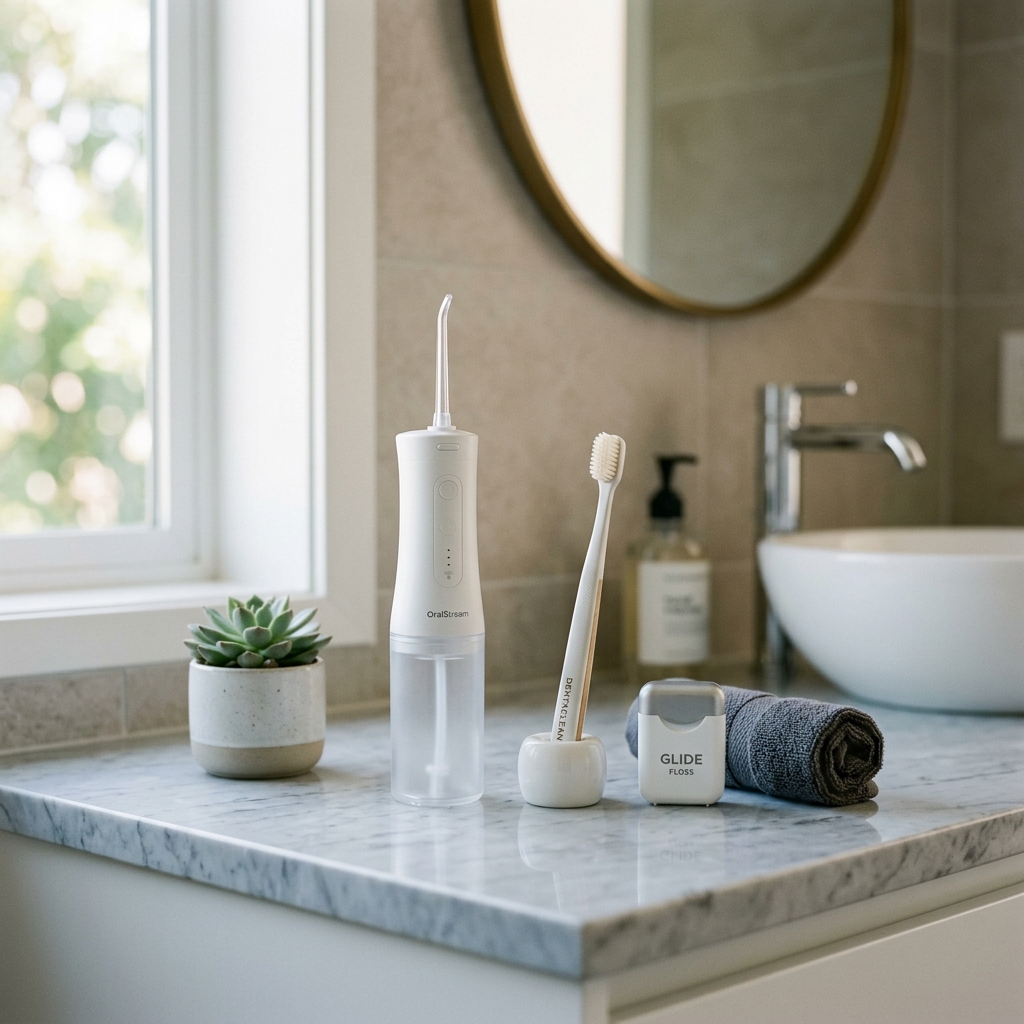
Using the correct oral hygiene instruments prevents accidental scratching of the implant components and ensures thorough plaque removal:
- Soft-Bristle Toothbrush: Always use a soft or extra-soft manual toothbrush or a high-quality sonic electric toothbrush. Medium and hard bristles can cause gum recession and abrade delicate peri-implant tissues.
- Low-Abrasive Toothpaste: Select a non-abrasive toothpaste with a low Relative Dentin Abrasivity (RDA) rating, ideally under seventy to eighty. Avoid highly abrasive whitening toothpastes, charcoal powders, and baking soda formulas, which can scratch the polished glaze of your ceramic crown and create microscopic grooves where bacteria thrive.
- Implant-Specific Dental Floss: Traditional thin floss can sometimes shred against restorations. Specialized implant floss, such as spongy bridge floss or super floss, features a thick, spongy middle section that expands to clean thoroughly around the implant neck.
- Plastic-Coated Interdental Brushes: Interdental brushes are excellent for cleaning between teeth and beneath implant bridges. However, ensure the central wire is coated in plastic or nylon. Never use brushes with exposed metal wires, as metal can scratch the titanium implant surface.
- Water Flosser (Oral Irrigator): A water flosser set to low or medium pressure is one of the most effective tools for flushing away food debris and subgingival plaque from hard-to-reach pockets around implants.
Step-by-Step Daily Cleaning Routine for Single Implants
Follow this comprehensive routine twice daily, once in the morning and once before bed:
- Brush Thoroughly for Two Minutes: Hold your toothbrush at a forty-five-degree angle toward the gumline. Use gentle, circular, vibrating motions to clean the front, back, and chewing surfaces of your implant crown and surrounding natural teeth.
- Clean the Implant Collar with Floss: Take a section of spongy implant floss and gently slide it between your implant and the adjacent tooth. Wrap the floss around the base of the implant crown in a crisscross 'shoe-shine' motion. Gently clean the circumference of the post just beneath the gum margin.
- Use an Interdental Brush: Gently guide a plastic-coated interdental brush into the space between the teeth at the gumline, moving it back and forth once or twice without forcing it.
- Flush with a Water Flosser: Aim the tip of the water flosser along the gumline at a ninety-degree angle, pausing briefly between each tooth to flush away lingering biofilm.
- Rinse with an Alcohol-Free Mouthwash: Complete your routine with an alcohol-free antimicrobial or fluoride mouthwash to keep oral bacteria in check.
How to Clean Full-Arch Fixed Bridges (All-on-4 / All-on-6)
If you have a full arch of teeth supported by four to six implants, your cleaning approach focuses on the small space between the underside of the bridge and your natural gumline:
- Floss Threaders: Use a flexible plastic floss threader to pull spongy bridge floss beneath the prosthetic bridge between each pair of implants.
- Specialized Sulcus Brushes: Use a single-tuft or end-tufted toothbrush with a narrow, angled bristle head to sweep around each individual implant abutment.
- Daily Water Flossing: Water flossing is indispensable for full-arch bridges. Sweep the water stream along the entire length of the bridge on both the cheek side and the tongue side to flush out trapped particles.
Signs of Peri-Implant Disease to Watch For
Catching gum inflammation early is crucial for preventing bone loss. Contact Dr. Wang immediately if you notice any of the following warning signs:
- Red, swollen, or tender gums around the implant.
- Bleeding when brushing or flossing.
- Persistent bad breath or a strange taste in your mouth.
- Any feeling of looseness or mobility in the crown or post.
The Importance of Professional Cleanings at The Honest Tooth
Even with perfect home care, microscopic calculus builds up over time and requires professional removal. At The Honest Tooth Dentistry in Walnut, California, our hygiene team uses specialized non-metallic instruments (such as medical-grade resin and titanium scalers) designed specifically to clean implants without scratching them.
Frequently Asked Questions
Can I use regular dental floss on my dental implant?
Yes, but you must be gentle. Do not forcefully snap floss down into the gumline. Wrap the floss gently around the tooth and use light sweeping motions.
How often should I have my dental implants professionally checked?
You should visit the dentist every six months for a professional cleaning, gum evaluation, and digital examination to ensure your bone levels remain robust.
Protect Your Smile with Expert Care in Walnut, CA
At The Honest Tooth Dentistry in Walnut, California, Dr. Mark Wang and our dedicated team are here to help you maintain a healthy, beautiful smile for life. Contact our office today to schedule your comprehensive preventive checkup.